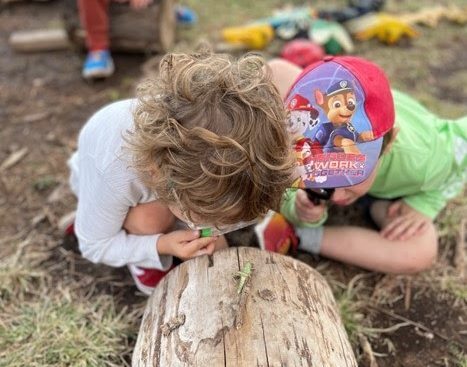
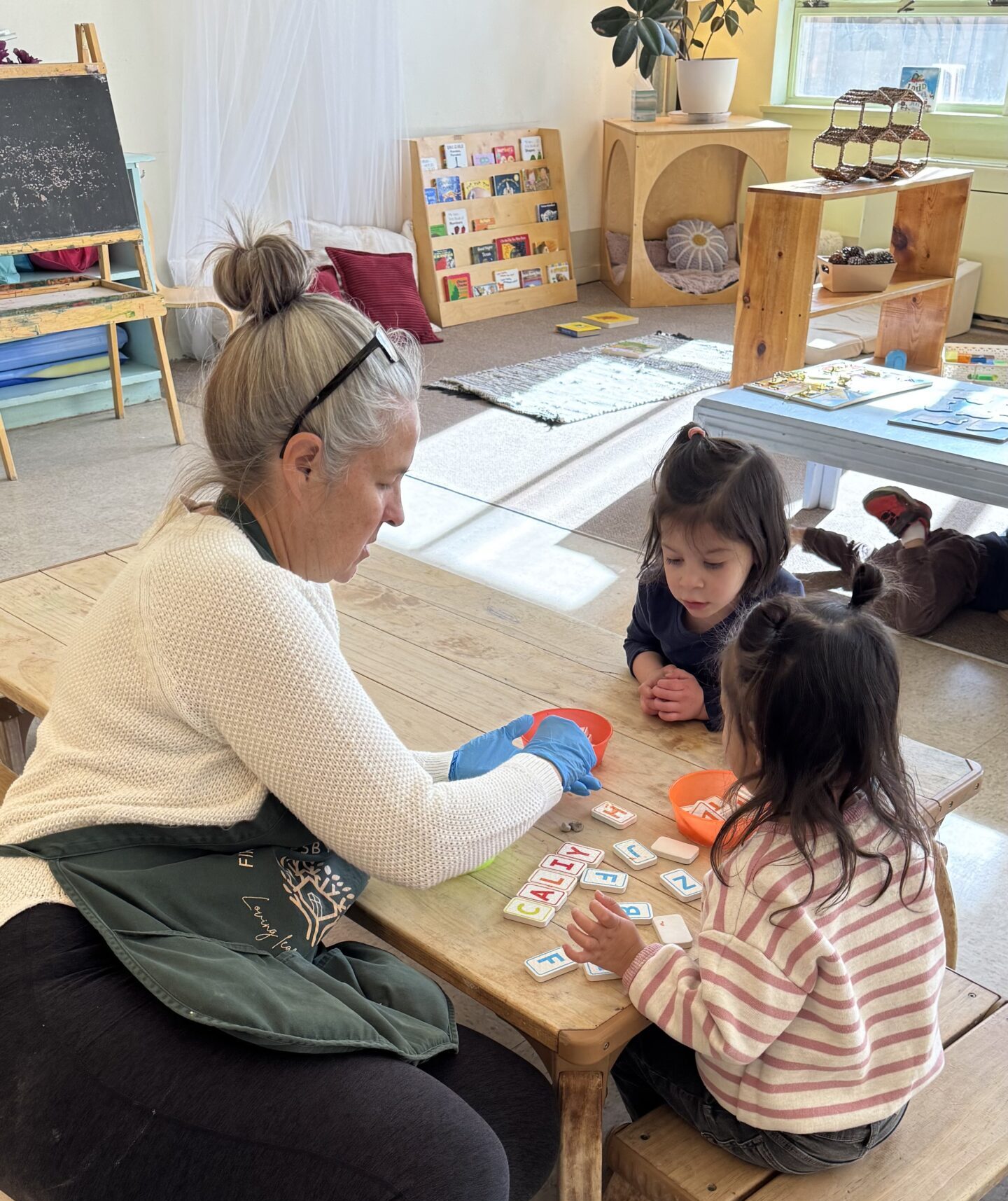
Children learn in relationship with teachers, classmates, families, and the wider community. Knowing a child well helps us understand how that child learns, communicates, plays, and makes meaning.
Reggio-Inspired Learning
A way of teaching that begins with a powerful idea: children are capable thinkers, curious explorers, and active participants in their own learning.
It Began in Italy. We Make It Our Own Here.
The Reggio Emilia Approach grew from the municipal infant-toddler centers and preschools of Reggio Emilia, Italy. Educator Loris Malaguzzi became a central figure in developing a vision of childhood built around children's rights, potential, relationships, creativity, and active learning.
Today, educators around the world are inspired by the ideas that emerged from Reggio Emilia. But a Reggio-inspired school in America is not meant to recreate an Italian school.
At First Pres, we take the questions Reggio asks about children and learning and interpret them within our own community, our own culture, our own environment, and the children who are actually here.
It Starts With What We Believe About Children.
One of the most important differences at First Pres is the way we begin. We don't begin by asking, "How do we get this child to learn?"
We begin by asking, "What is this child already capable of? What are they wondering about? What are they trying to understand? What might they be able to do next?"
We see young children as capable, curious, creative, and full of ideas. That image of the child changes what teachers notice, what environments they create, what questions they ask, and what opportunities they provide.
Reggio-Inspired Does Not Mean "Just Play."
This may be the most important thing for parents to know.
Our teachers absolutely teach. They teach children how to use scissors safely. They model how to hold a pencil. They introduce letters and sounds. They help children notice patterns, count, compare, predict, communicate, solve problems, and understand the world around them.
Sometimes that teaching is explicit and direct. Other times it happens through the environment, materials, conversations, stories, play, investigations, and relationships that fill a child's day.
The difference isn't whether we teach. The difference is that we intentionally weave teaching into meaningful experiences rather than assuming every important thing must be taught through a worksheet, lesson, or whole-group activity.
What Reggio Inspiration Looks Like Here
Reggio-inspired education is not a curriculum packet or a list of activities. It is a way of thinking about children, teachers, environments, relationships, and learning.
Our classrooms and outdoor spaces are designed to invite children to wonder, make choices, work independently, collaborate, revisit ideas, and use materials in many different ways.
Teachers make learning visible through photographs, children's words, observations, work samples, and displays. Documentation helps children see their own thinking and helps teachers decide where learning might go next.
Children's questions and theories are taken seriously. A child's curiosity is not simply something to answer quickly; it can become an invitation to investigate, test ideas, and discover more.
Children learn with and from one another. Teachers create opportunities for children to exchange ideas, disagree respectfully, solve problems together, and build shared understanding.
Teachers observe, listen, document, reflect, and plan. What we see today can change what we offer tomorrow. In this way, curriculum grows in response to the children rather than being completely predetermined before they arrive.
There Is More Than One Way to Think.
Reggio educators speak about the "hundred languages" of children: the many ways children communicate, explore, construct ideas, and make meaning.
A child may express an idea through words, drawing, painting, clay, building, movement, music, dramatic play, mathematics, light and shadow, nature, or a dozen other forms of expression.
At First Pres, the arts and materials are not simply something children do after the "real learning" is finished. They are part of how children think and communicate.
We want children to have many ways to show us what they know— including ways that don't yet involve reading or writing a sentence.
Our Teachers Don't Step Back. They Look Closer.
In a Reggio-inspired classroom, the teacher is not simply a person standing at the front delivering information. But that does not mean the teacher is passive.
Our teachers observe, listen, ask questions, model skills, introduce materials, extend language, offer challenges, and create opportunities for children to think more deeply.
They document what children are doing and saying so they can better understand the thinking behind the behavior. Then they use that understanding to make thoughtful decisions about what to offer next.
The teacher's work is intentional—even when the learning looks like play.
Will My Child Be Academically Prepared?
Yes. But we believe kindergarten readiness is about much more than completing a stack of worksheets.
Throughout the preschool years, children are developing early literacy, language, mathematical thinking, scientific reasoning, fine-motor skills, executive function, problem-solving, communication, and the ability to work with others.
Some skills are explicitly taught. Others are developed through carefully designed environments, play, conversation, stories, materials, movement, art, nature, and children's investigations.
We want children entering kindergarten not only to recognize letters or count objects, but to be curious, confident, flexible thinkers who know how to ask questions, try something difficult, communicate an idea, and keep going when the first attempt doesn't work.
Our Place Matters.
Reggio-inspired education asks us to pay attention to the children, families, culture, and community around us. That means our expression of Reggio should look like First Pres—and it should look like El Paso.
Our children spend significant time outdoors. They encounter natural materials, art, music, movement, stories, and Spanish language throughout their experiences. Even in English-only classrooms, children hear Spanish through songs, stories, audiobooks, and everyday vocabulary.
We are not trying to copy a preschool in Italy.
We are asking what it means to see children as capable and full of potential in our particular place, with our particular community, and then building a learning environment worthy of that belief.
Come See Learning in Action.
The best way to understand our approach is to see it for yourself. Visit our classrooms, meet our teachers, explore our outdoor spaces, and watch how children learn when curiosity is taken seriously.
Schedule a Visit